← The Journal
    Field guide · Source-based

    How to identify toxic mushrooms in your yard.

    The features that flag the dangerous lawn and garden mushrooms, how to document one for your vet, and how to keep your yard clear — before your dog finds one.

    6 min readPublished 2026-05-19Sources reviewed 14 Oct 2026
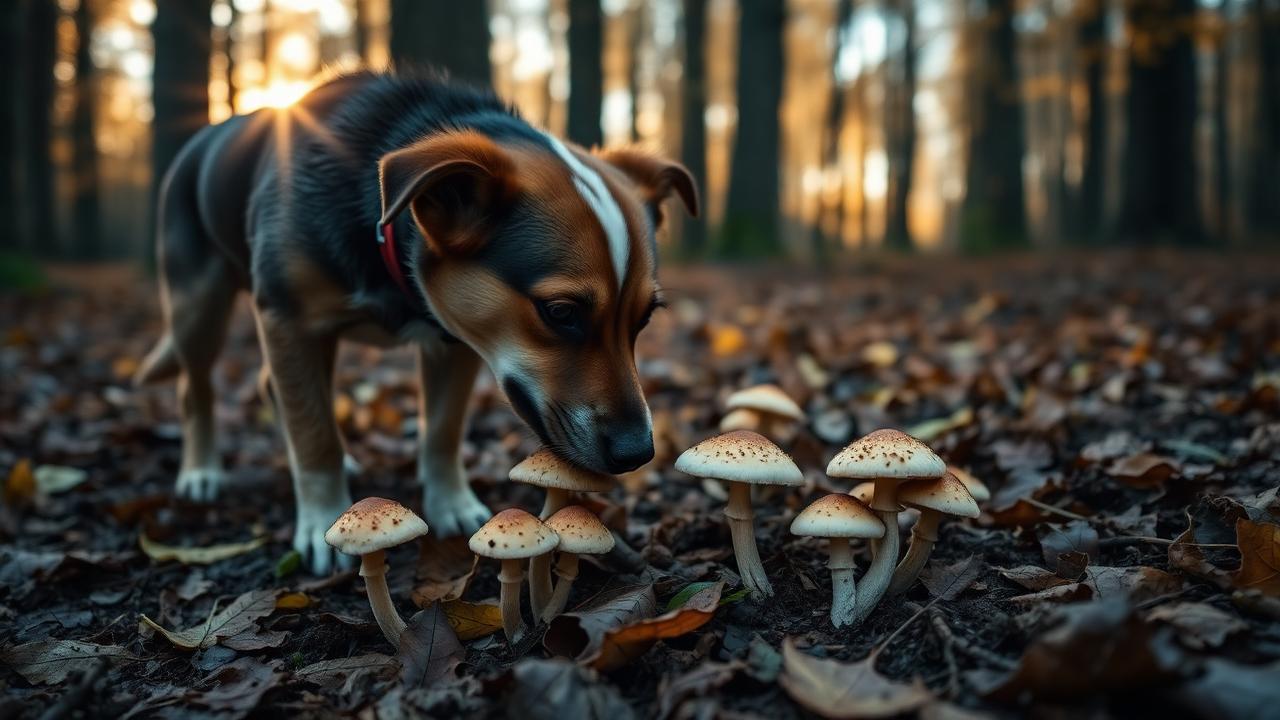
    A dog sniffing wild mushrooms on a forest floor at dusk — the situation that prompts most owner calls every autumn.
    Every autumn we see a spike in mushroom calls from the same parks. The hardest part isn't treatment — it's getting a photo of the mushroom before it's destroyed.

    Your dog already ate a mushroom? Go to the dog-ate-a-mushroom emergency guide and call your vet or the ASPCA Animal Poison Control Center at (888) 426-4435 now.

    TL;DR

    Treat every wild mushroom ingestion as toxic until proven otherwise. Bag a sample, photograph it where it grew, and call a vet immediately. The most dangerous moment is the false recovery at hour 24 — don't be reassured by it.

    Identifying yard mushrooms: what to look at

    Even experienced foragers get mushrooms wrong, so the goal isn't to decide "safe" — it's to spot the warning features and collect what your vet or a mycologist needs.

    • White gills, a ring on the stem and a cup or sac at the base — the classic Amanita pattern, the group behind most fatal liver poisonings. Dig the whole mushroom up: the cup is often buried.
    • Small brown mushrooms on wood chips, mulch or rotting logs — some (such as Galerina) carry the same liver toxins as Amanita.
    • Large white lawn "parasols" that appear in rings after rain — the green-spored parasol (Chlorophyllum molybdites) is one of the most common causes of severe vomiting in dogs.
    • Small, fibrous-capped or white funnel-shaped lawn mushrooms — Inocybe and Clitocybe species can cause drooling, tearing, diarrhea and a slow heart rate.

    How to document a mushroom for your vet

    1. Photograph it where it grows: top of the cap, underside (gills or pores), the stem and the base.
    2. Wearing gloves, dig out the whole mushroom including the base, and put it in a paper bag — not plastic, which turns it to mush.
    3. Note where it grew (lawn, mulch, under which tree) and how many there were.

    Keeping your yard clear

    • Walk the yard the morning after rain — most mushrooms appear overnight.
    • Remove mushrooms whole with gloves and bin them; mowing just spreads the pieces.
    • Reduce shade, standing water and old mulch where they cluster.

    Why "what mushroom is it" is the wrong first question

    Mycologists need spore prints, gill structure, habitat, and sometimes microscopy to identify a wild mushroom. A photograph isn't enough — and apps misidentify dangerous species often enough that toxicology services explicitly recommend ignoring them in an emergency.

    The better question: what syndrome am I seeing, and how fast is it moving? That's how vets actually triage these calls.

    The six syndromes

    Amanita (hepatotoxic)

    Life-threatening

    Examples: Death cap (A. phalloides), destroying angel (A. ocreata, A. virosa), A. smithiana

    Symptoms: Vomiting, diarrhea (often bloody), then deceptive recovery, then acute liver failure on days 2–4.

    Onset: GI signs 6–12 hr; liver failure 24–72 hr

    Inocybe / Clitocybe (muscarinic)

    Serious

    Examples: Many small brown 'LBMs' on lawns and trails

    Symptoms: Salivation, lacrimation, urination, defecation, miosis, bradycardia (SLUDGE).

    Onset: 15–90 min

    Hallucinogenic (psilocybin)

    Serious

    Examples: Psilocybe spp., 'magic mushrooms'

    Symptoms: Ataxia, vocalization, dilated pupils, tremors, hyperthermia.

    Onset: 30–60 min

    GI irritants

    Usually mild

    Examples: Chlorophyllum, Boletus, Russula, many backyard species

    Symptoms: Vomiting, diarrhea, abdominal pain. Self-limiting if mild.

    Onset: 30 min – 6 hr

    Gyromitra (false morels)

    Life-threatening

    Examples: Gyromitra esculenta

    Symptoms: Vomiting, lethargy, then seizures and hemolysis 6–24 hr later.

    Onset: 6–24 hr

    Cortinarius (nephrotoxic)

    Life-threatening

    Examples: C. orellanus, C. rubellus

    Symptoms: Delayed acute kidney injury — symptoms 3–14 days later.

    Onset: Days

    The 90-second action plan

    1. Stop further ingestion. Leash up, sweep the area, check the mouth.
    2. Bag a sample. Paper bag, not plastic (plastic accelerates decomposition). Include intact cap, stem, and the base where it joined the soil — the volva at the base is diagnostic for Amanita.
    3. Photograph in situ. Top of cap, underside (gills), where it was growing (soil, mulch, near what tree).
    4. Note the time and any symptoms.
    5. Call a vet or 24/7 animal poison-control hotline. Many large veterinary schools have mycology referral networks.
    6. Do not induce vomiting unless directed.
    The 24-hour trap.

    Amanita and Gyromitra ingestions classically feature a "well phase" 18–36 hours after ingestion, when the dog seems recovered. This is the period when liver damage is silently completing. Do not stop watching, and do not skip the follow-up bloodwork.

    Prevention that actually works

    • Sweep your yard during fruiting season (post-rain, late summer through fall).
    • Keep dogs leashed in unfamiliar wooded areas during peak season.
    • Teach a strong "leave it" cue before you need it.
    • Be especially cautious around mulched beds and rotting logs — Amanita and Inocybe both favor these habitats.

    Related reading

    Get a vet-style triage in 90 seconds.

    Frequently asked questions

    What should I do if my dog ate a wild mushroom?+

    Treat every wild mushroom ingestion as potentially toxic. Even experienced mycologists can't identify some deadly species (like Amanita phalloides) at a glance, and most veterinary toxicology services recommend decontamination regardless. Bag a sample, photograph the mushroom in situ, and call a vet or poison-control hotline immediately.

    How do I know if a wild mushroom is poisonous to dogs?+

    You usually can't — and that's exactly the danger. Identification often requires spore prints and microscopy. Roughly 1% of wild mushroom species are dangerously toxic to dogs, but those are the ones that kill, and visual ID is unreliable. Assume toxic until proven otherwise.

    How quickly do mushroom poisoning symptoms appear in dogs?+

    GI irritants: 30 minutes to 6 hours. Muscarinic mushrooms: 15–90 minutes. Hallucinogenic: 30–60 minutes. The dangerous outlier is Amanita hepatotoxic species — early GI symptoms at 6–12 hours are followed by a deceptive 'recovery,' then acute liver failure at 24–72 hours. Some poisonings show signs later than this. If in doubt, call your vet.

    What does mushroom poisoning look like in a dog?+

    Varies by mushroom group. Salivation, vomiting, diarrhea, wobbliness, tremors, dilated pupils, or seizures. Some toxic species cause delayed (1–4 day) kidney or liver failure with no early warning.

    Should I make my dog throw up after eating a wild mushroom?+

    Only if a vet or poison-control hotline tells you to. Some toxic species cause aspiration-prone neurological signs that make induced vomiting dangerous. Decontamination is more effective and safer in clinic.

    What time of year are wild mushrooms most dangerous?+

    Late summer through fall in most temperate climates — especially after a rainy stretch. Spring also produces toxic species (e.g., Gyromitra). Walk your dog on a leash through wooded or mulched areas during fruiting season.

    Can a dog survive eating a death cap mushroom?+

    Sometimes — with aggressive ICU treatment started within the first 24 hours. Mortality remains high (~30–50%) even with treatment. The deceptive 'recovery' phase at 24 hours is the most dangerous moment to be reassured.

    What's the most common wild mushroom poisoning vets see?+

    GI-irritant mushrooms by far. Most calls involve self-limiting vomiting and diarrhea. But because deadly Amanita species look unremarkable, every case is triaged as if it could be the dangerous one.

    Sources

    • Puschner B. Mushroom toxins. In: Small Animal Toxicology (3rd ed). Elsevier.
    • North American Mycological Association — toxicology committee reports
    • ASPCA Animal Poison Control Center — mushroom toxicosis
    • Pet Poison Helpline — mushroom clinical reference

    Sources reviewed 14 Oct 2026. Educational reference, not veterinary advice.